

The Secret Weapon of Successful Resellers: Mastering eBay's "Sold" Listings
- Justin
- Feb 4
- 3 min read

So, you've got the reselling bug, and you're eyeing that vintage lamp at the thrift store, wondering if it could be a goldmine. Or maybe you're decluttering and thinking, "Could I actually sell this?" Before you snap a photo and list it, there's a crucial step that separates casual sellers from savvy resellers: checking eBay's "Sold" listings. This isn't just a good idea; it's essential market research that can make or break your reselling success.
Why "Sold" Listings Are Your Best Friend:
Looking at current listings on eBay only tells you what people are asking for an item. It doesn't tell you what people are actually paying. That's where the "Sold" section comes in. It reveals the real market value of an item by showing you what it has recently sold for. This information is pure gold for resellers.
How to Use "Sold" Listings Like a Pro:
Find Your Item: Search for the item you're considering selling. Be as specific as possible with your keywords. The more details you include (brand, model, size, condition), the more accurate your results will be.
Filter for "Sold" Items: On a phone: on the right-hand top side you'll see a "filter" button, tap on the button. When the list opens, tap "Show More". Scroll down until you see, "Sold Items", tap the dot to toggle it on. Then tap "Show Results", this will now show you the sold listings only.

Tap, "Filter" to open more options 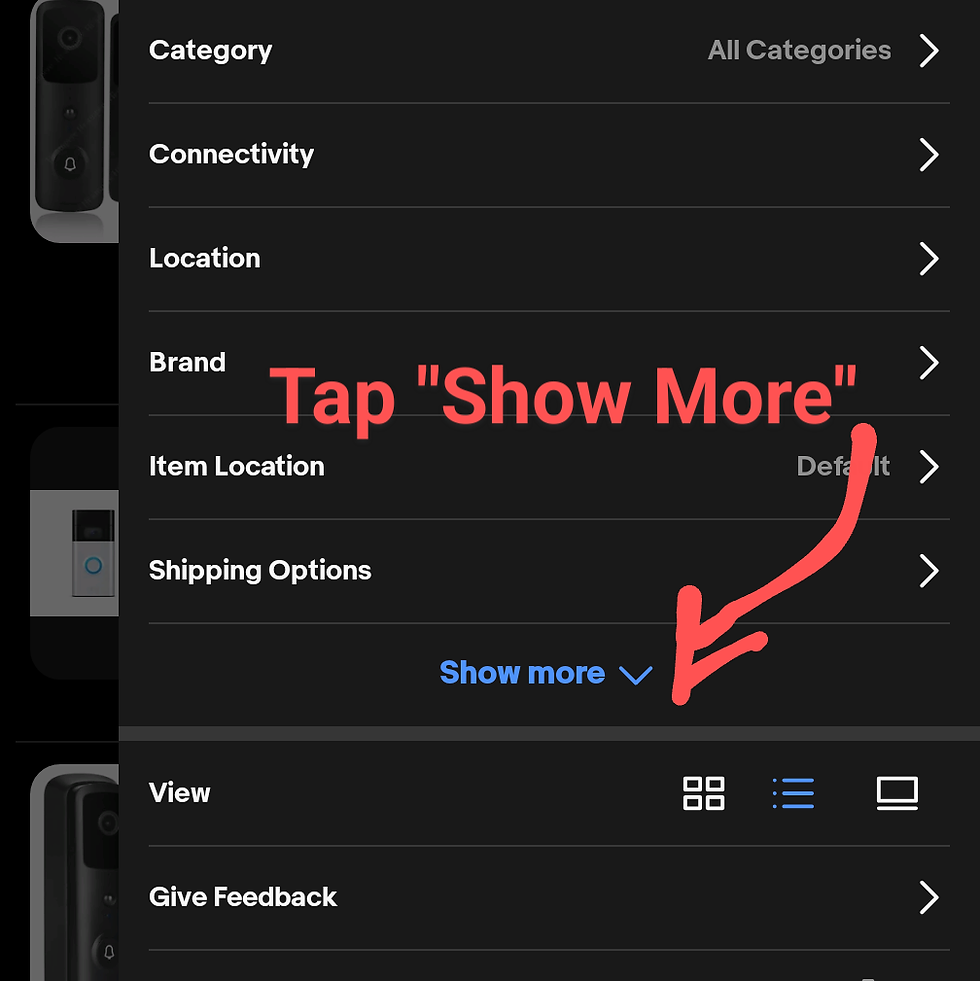
Tap, "Show More" 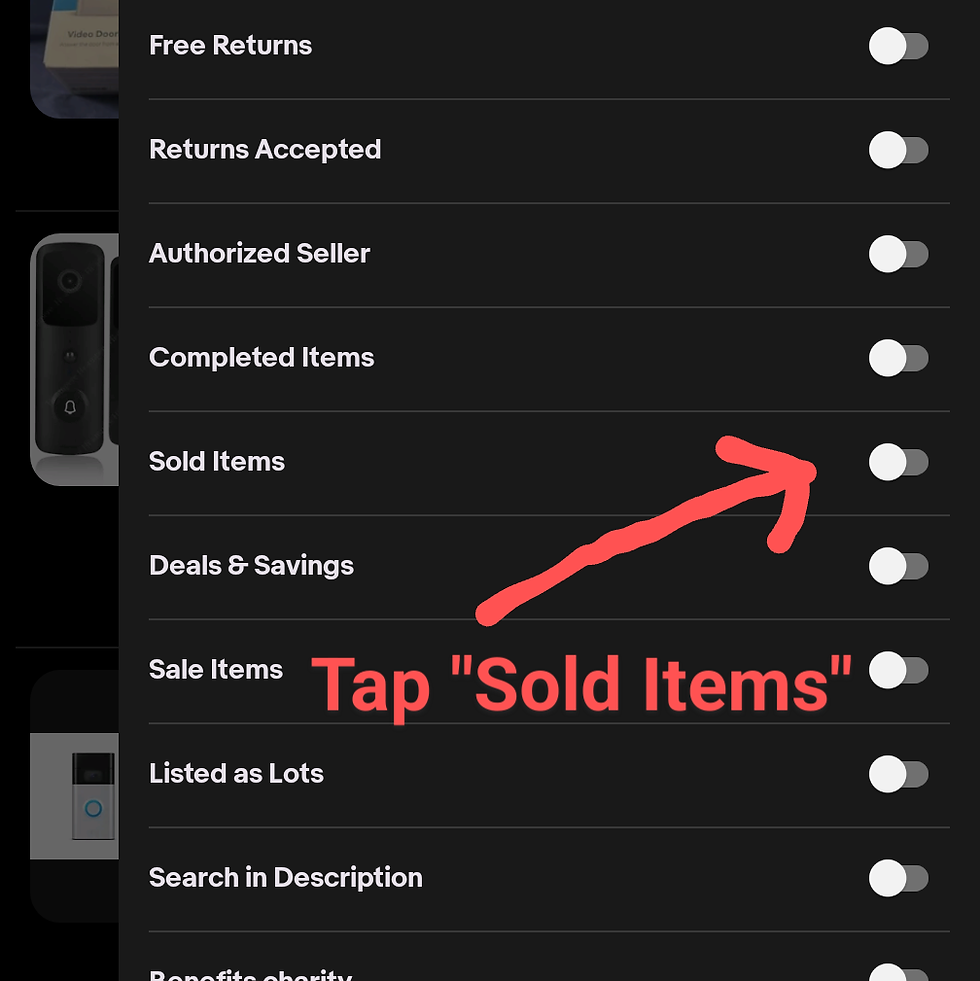
Tap, "Sold Items" to toggle white dot to blue 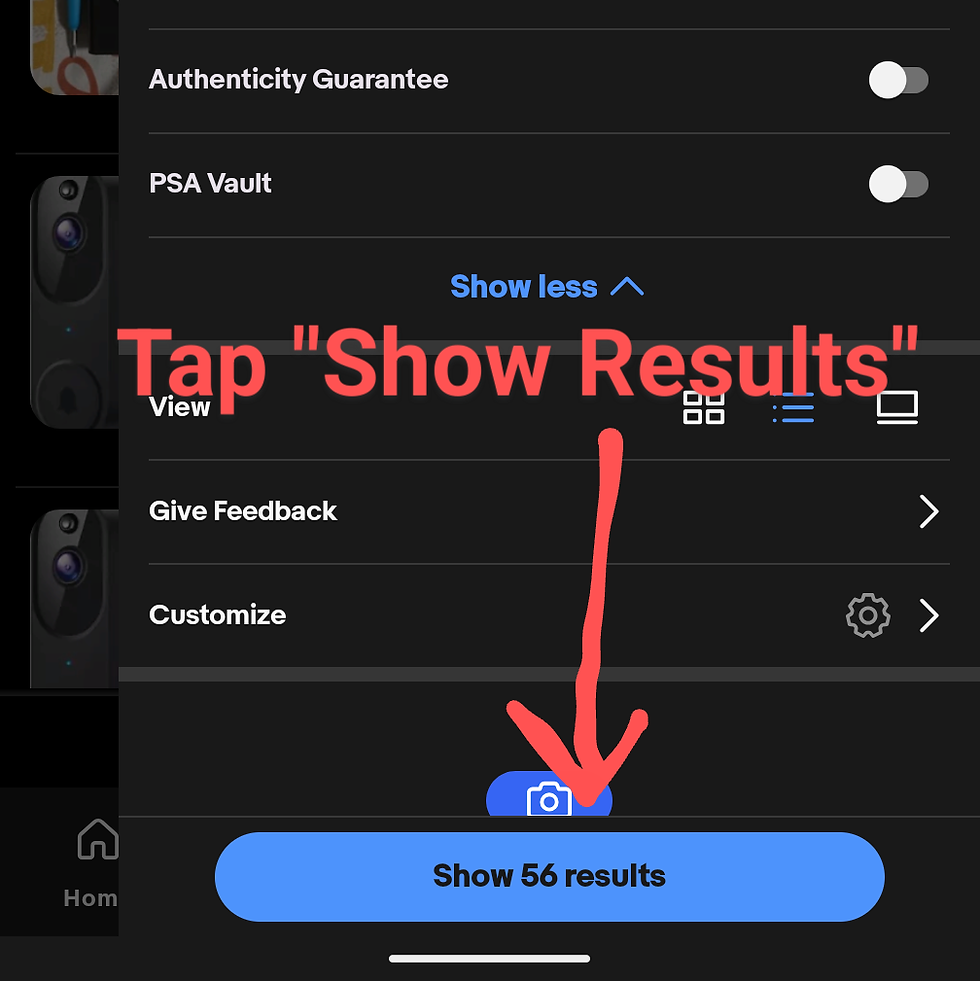
Tap, "Show Results" 
This will show you the "sold" listings only for the item you searched for. Analyze the Data: Now the real work begins. Don't just glance at the prices; analyze them:
Price Range: What's the highest and lowest price the item has sold for? This gives you an idea of the potential profit margin and how much variation there is in pricing.
Condition Matters: Pay close attention to the condition of the sold items. A mint condition item will obviously fetch a higher price than a damaged one. Be realistic about the condition of your item and compare it to similar sold listings.
Sales Frequency: How often has the item sold? If there are multiple recent sales, it suggests consistent demand. If there are only a few sales over a long period, it might be harder to sell.
Listing Details: Look at the titles and descriptions of successful listings. What keywords did they use? What details did they emphasize? This can give you valuable insights into how to create effective listings for your own items.
Pro Tip: Once you find a sold listing, open it up and you'll see the option to "Sell One Like This". When you tap on it, your listing will begin and most information from the previous sold listing will already be in your new listing for that item. Please make sure to double check all the information to make sure its accurate.
Best Offer: Some sold listings will show "Best Offer Accepted." This means the final selling price was lower than the original listing price. Keep this in mind when estimating your potential profit.
Factor in Your Costs: Once you have a good understanding of the selling price, factor in your costs:
Acquisition Cost: How much did you pay for the item?
eBay Fees: eBay charges a percentage of the final sale price. (I like to factor in 13% fees on any items I sell. This usually gets me close to the actually fees.
Shipping Costs: Will you offer free shipping, or will the buyer pay? Factor in the cost of packaging materials and postage. I highly recommend you package up the item to get an accurate shipping cost. (speaking from experience)
Other Costs: Consider any other costs, such as cleaning, repairs, or storage.
Make an Informed Decision: Based on your research, you can now make an informed decision about whether or not the item is worth reselling. If the potential profit margin is good after considering all costs, go for it! If not, it's better to move on to something else.
Pro Tip: eBay's "Sold" listings only show data for the past 90 days. Keep this in mind, especially for seasonal items.
Beyond eBay: While this blog focuses on eBay, the principle of checking sold listings applies to other online marketplaces as well. Do your research before you list, and you'll be well on your way to reselling success!


Comments